

I am not a gamer, but Zach Cregger’s Resident Evil captures what I imagine the experience of playing an immersive video game must feel like. There are two moments in particular where he utilizes a prolonged POV — moving through a snowy forest of fir trees, edging across a narrow ledge 24 stories up — where you *are* the lead character and if something bad were to happen, you know it would be game over.
Isn’t this the experience you want from a horror movie based on a video game? You want to feel scared, you want to feel like danger lurks around the next blind corner, you want the push-and-pull of the white-knuckle adrenaline ride and subsequent dopamine rush for momentary survival. At least, I imagine you do. I definitely enjoyed it.
Resident Evil is the third video game adaptation I’ve watched this year. Each of them approached their task in very different but equally creative ways. Until Dawn (David F. Sandberg, 2025) utilized the Groundhog Day nature of dying in a game only having to redo what you’ve already done — but with the added complexity and horror of things being different every time. Exit 8 (Genki Kawamura, 2025) similarly made excellent use of the relentless loop of experience, setback, and eventual progress to craft a surprisingly complex and compelling cinematic experience. Resident Evil doesn’t offer any such sense of second (or third, or sixth) opportunities, instead it is a speedrun for survival moving from Point A to Point B and so on.
The film’s protagonist, Bryan (Austin Abrams), is a medical transplant courier who begins the story with a mission to deliver a critical cooler to a hospital several towns away. But en route there, while driving along an icy road, a woman darts out of the trees and is stuck by his car. He helps her up, but there’s clearly something not right with her. From there, the undead Eldrich-esque horrors unfold in a relentless sequence of action-packed set pieces, thankfully slowing down every so often just enough to let us catch our breath.
Resident Evil keeps its focus narrowly focused on Bryan as he stumbles from one ridiculously outrageous situation to the next as the danger continually escalates. There is zero context as to what it happening lore-wise (at least until the film’s third act) and there is no need for it. We don’t need to understand what’s going on (Bryan doesn’t), all we need to know is there are monsters and he is in danger.
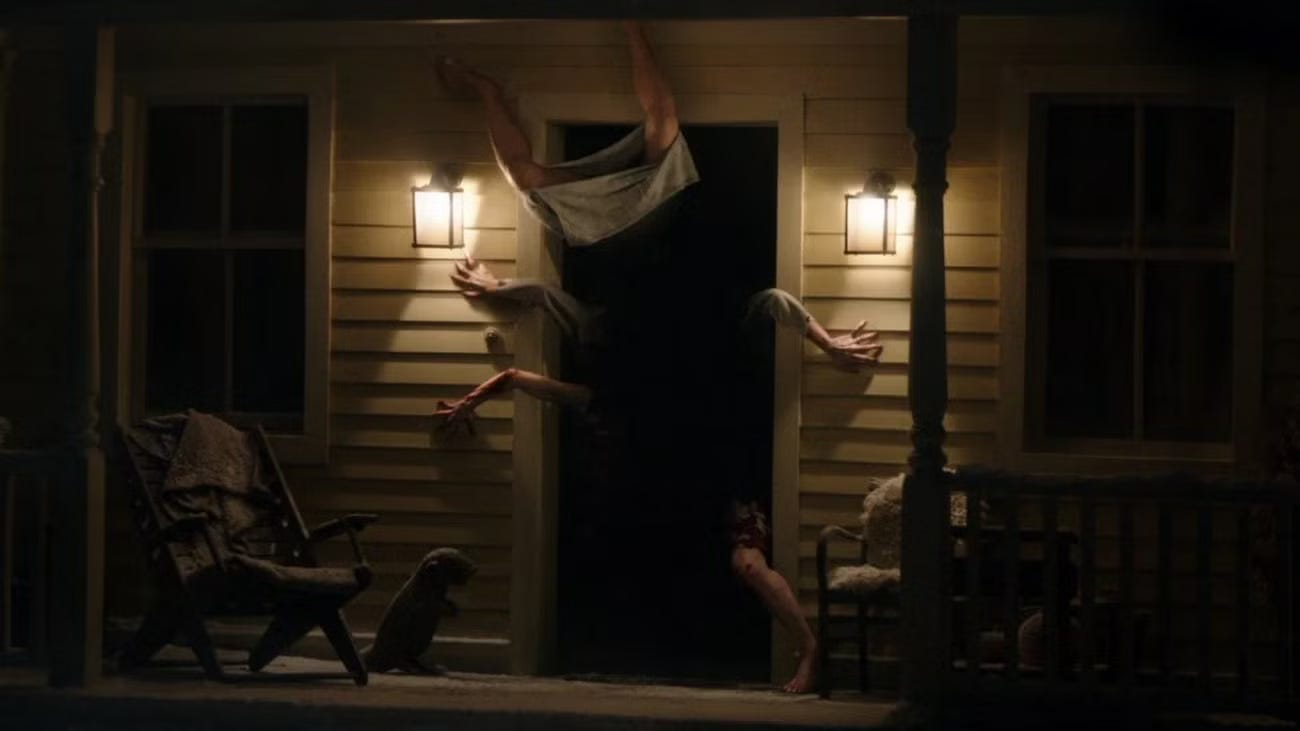
I was surprised but appreciative of the amount of humor in this film. Bryan is in constant disbelief at the horror scenario that he’s wandered into, and he spends most of the film screaming whilst hurriedly making poor choices or struggling with his weapons. As someone who is shit at video games, I could both relate and recognize that Bryan does far better than I would in his situation. Yet Resident Evil to avoid the clichéd trap of horror characters doing stupid things because that’s what the plot calls for. Here, Bryan literally doesn’t have a choice. Most of the time he is funneled from one scary moment to the next, simply trying to survive. Sure, he occasionally makes a dumb decision, but when he does, he chastises himself for it or else rails against the problem itself. For a legitimately terrifying horror movie, it’s very funny — and a whole lot of fun.
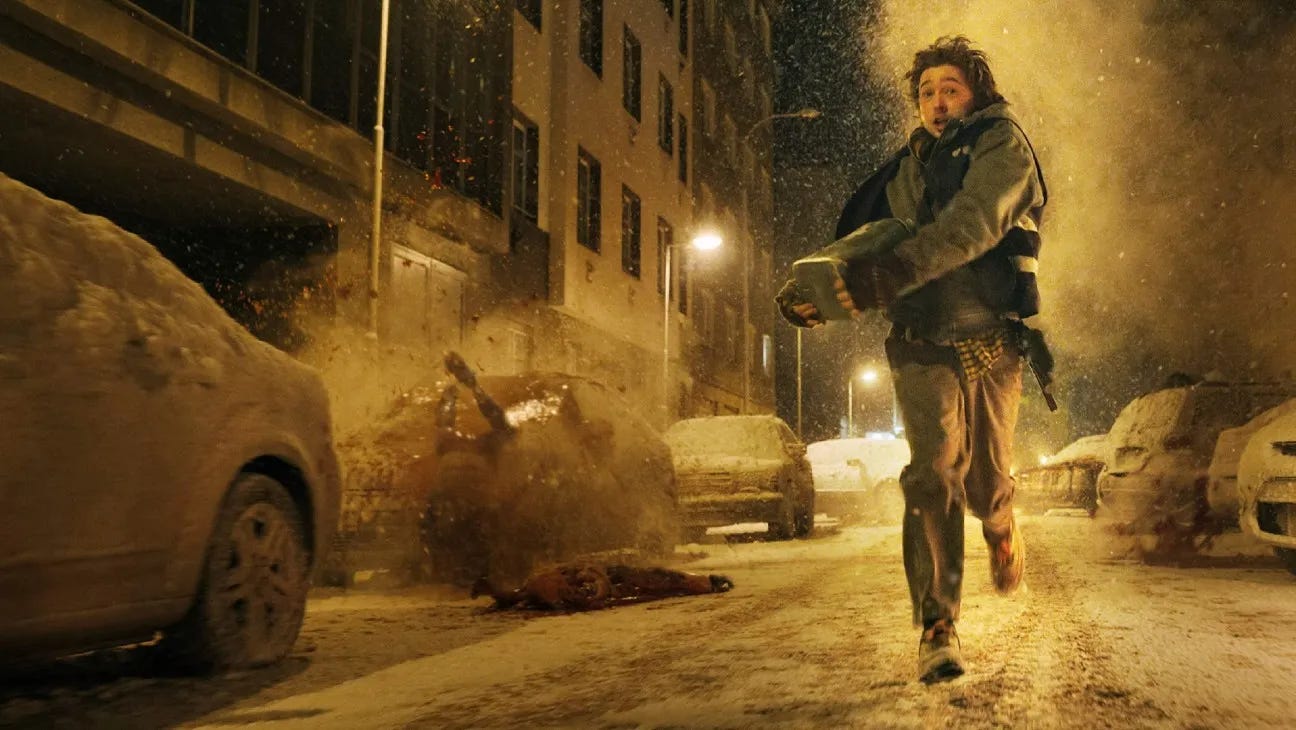
Cregger does a great job of balancing the tone of the film as well as elevating the artistry. There are some stunningly beautiful visuals throughout the film; in one early shot, after he hits the woman with his car, Bryan edges cautiously along the road, the snowy scene bathed in a creepy red glow from his car’s taillights. There’s another more kinetic sequence too, in which a hoard of murderous creatures hurl themselves off rooftops in a hair-brained attack on Bryan as he sprints through the street below, their diseased bodies splattering all around him. It’s magnificent but disgusting horror imagery — and there’s even worse to come.
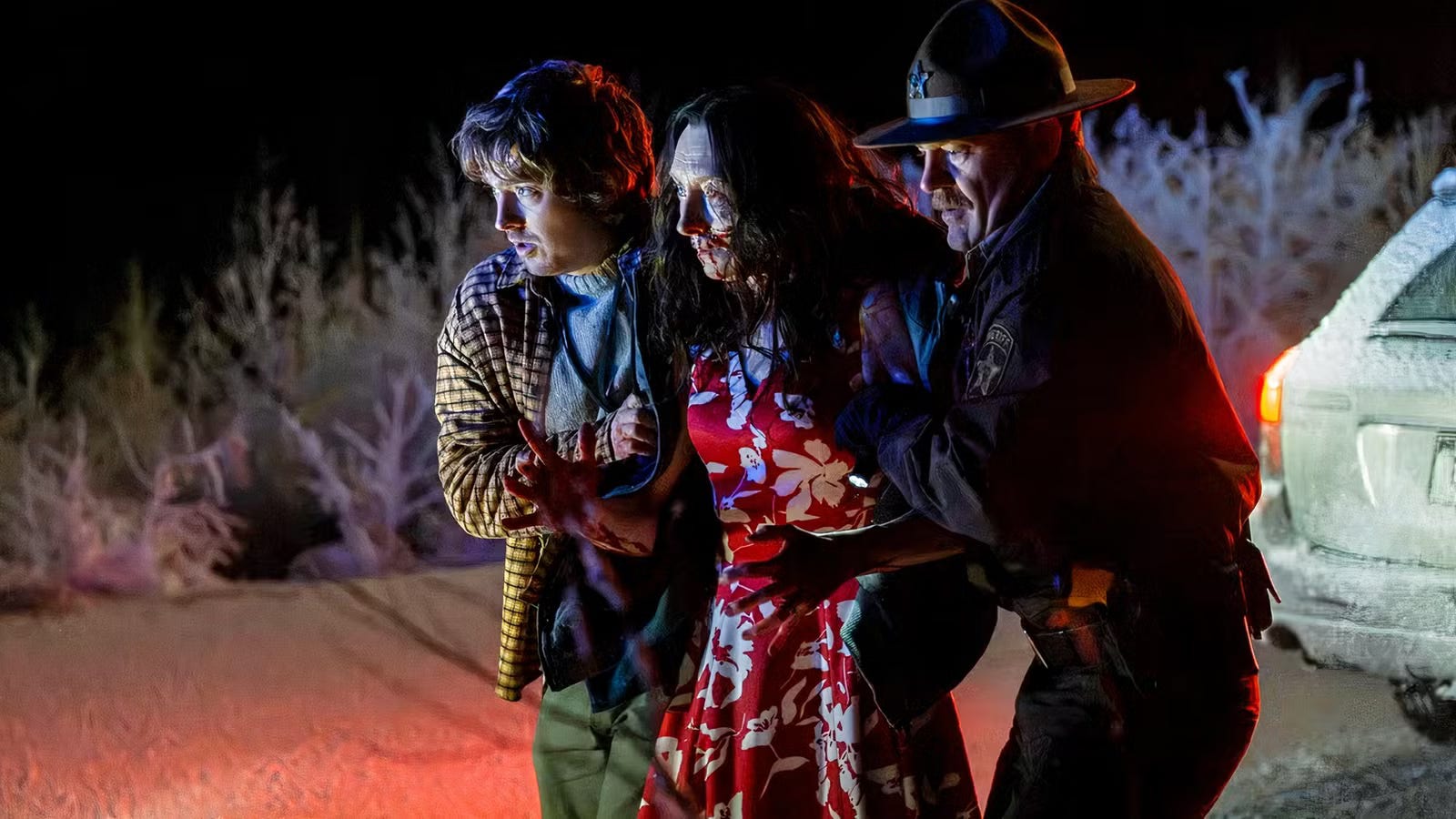
Of course, this is a movie and not a video game, so there is an attempt at an emotional throughline for Bryan throughout his hellish night of terror. He has just learned that he’s about to become a father and is still struggling to come to terms with how he feels about that when everything goes sideways. While this context adds a little depth to his otherwise one-dimensional (yet entirely adequate) character, I found it suffered in comparison to the recent Exit 8 which utilized a similar approach but, I felt, did it much better.
I’ll admit that my enthusiasm for Resident Evil was muted when first learning of the project. After the creative originality of Barbarian and Weapons, Cregger was regressing to established studio IP? Certainly, he’s playing in a different register that we’re used to here, but it works. (As much as I love Weapons, the Paul segment does kill the momentum, but there is no such criticism here.) Resident Evil is a nerve-shredding, action horror thrill ride that does not let up. I loved it and, as ever, I can’t want to experience whatever Cregger does next.