

Horror can be many things. Sometimes it’s ghosts. Sometimes it’s serial killers. In Let’s Go Play at the Adams’ the horror is five bored children in the waning days of summer.
When I first bought Valancourt Books’ boxset of Paperbacks from Hell, Let’s Go Play at the Adams’ is one that caught my eye early on. Its distinct cover design (featuring an illustration of a babysitter in a negligée tied to a chair) promised an obvious conceit: a babysitter at the mercy of the kids she’s supposed to be minding. It seemed like a fun, pulpy, entertaining read.
Oh, how misled I now feel! Better Watch Out, this is not.
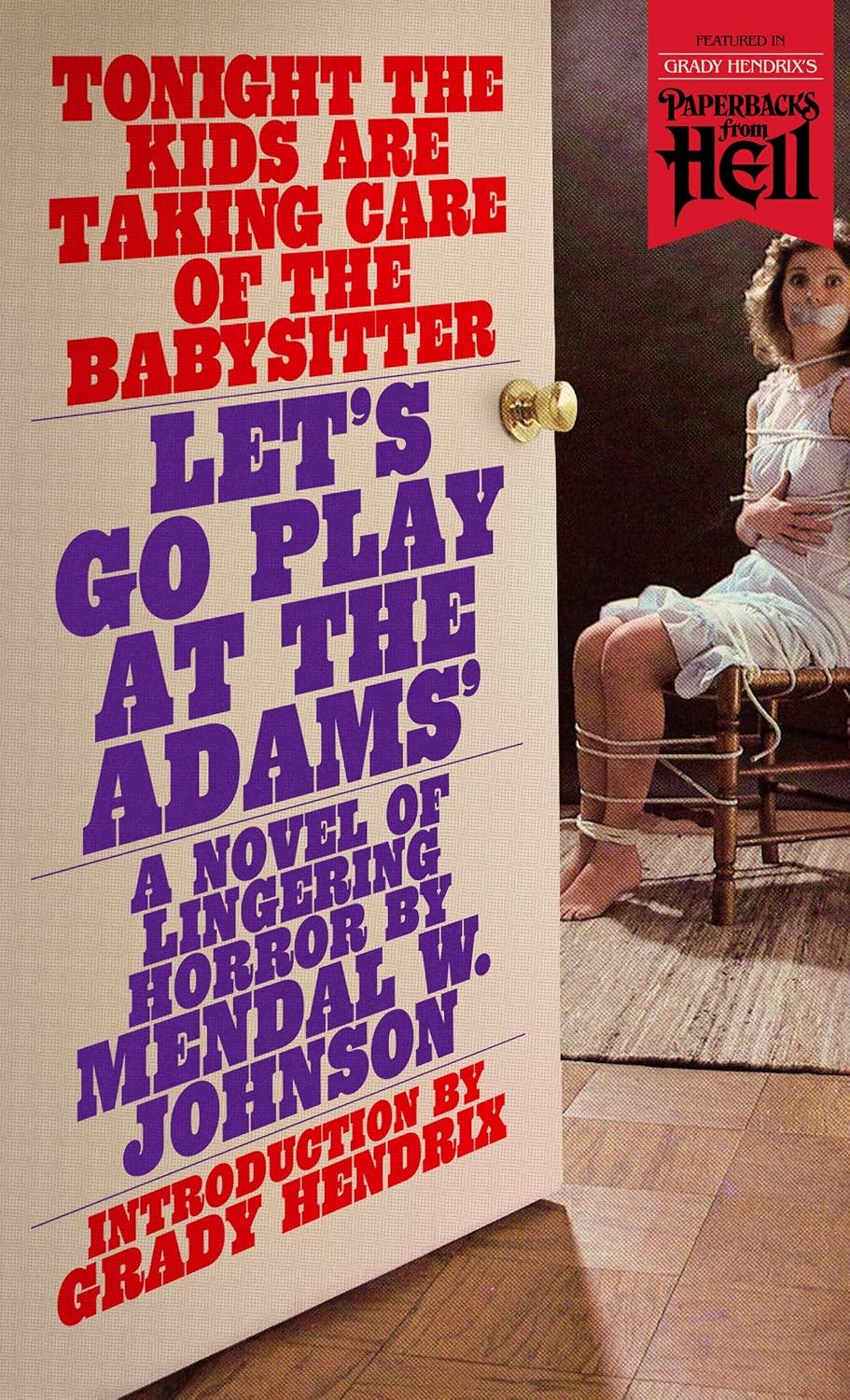
Let’s Go Play at the Adams’ is not at all a “fun” horror read. It is a novel of harrowing sadness — and far, far darker than its cover led me to expect. Although, to be fair, my prediction of the story within was not entirely inaccurate:
A 20-year-old babysitter, Barbara, is held hostage by five children (Bobby, Cindy, John, Dianne, and Paul) ranging in age from 10 to 17.
That, essentially, is it as far as the plot goes. The book starts immediately (save for a very brief prologue) with Barbara waking to discover that she has been tied to her bed. Turns out that Bobby chloroformed her in the middle of the night and made her a prisoner. From thereon out, Barbara’s story is just that: her existence as a prisoner of the children. Tethered, shackled, fettered.
The book details what occurs to her over the course of the next several days. But Barabara is a bound and gagged prisoner for all of it.
The book, then, is about the suffering she endures, and the impossibility of her escape. It is a clear-eyed and unflinching novel about pain, the theft of autonomy, and ultimately about how her mind seeks refuge from the pain, from the humiliation, from the agonizing waking hours that seem to stretch into infinity.
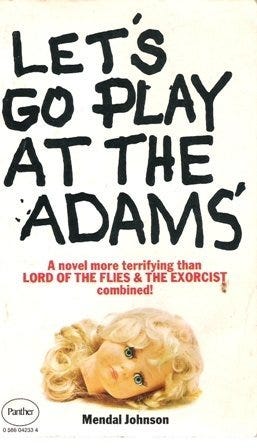
I realize this likely doesn’t make the book sound appealing, but I promise you it is indeed a compelling and haunting read. I will concede that the book is torture for its readers.
Most of all, the book is about the horror those five kids represent.
Bobby, Cindy, John, and Dianne are not psychopaths (although it is strongly implied that 13-year-old Paul is), but rather they are entirely nonchalant about the horrors they are inflicting on this young adult that have conquered. At the beginning, they decide to imprison Barbara for a game, but when things rapidly escalate, they continue to act utterly non-plussed about the situation. Their nonchalance is the result of a staggering lack of empathy — and that to me is the heart of the book, and the core of the horror which it possesses.
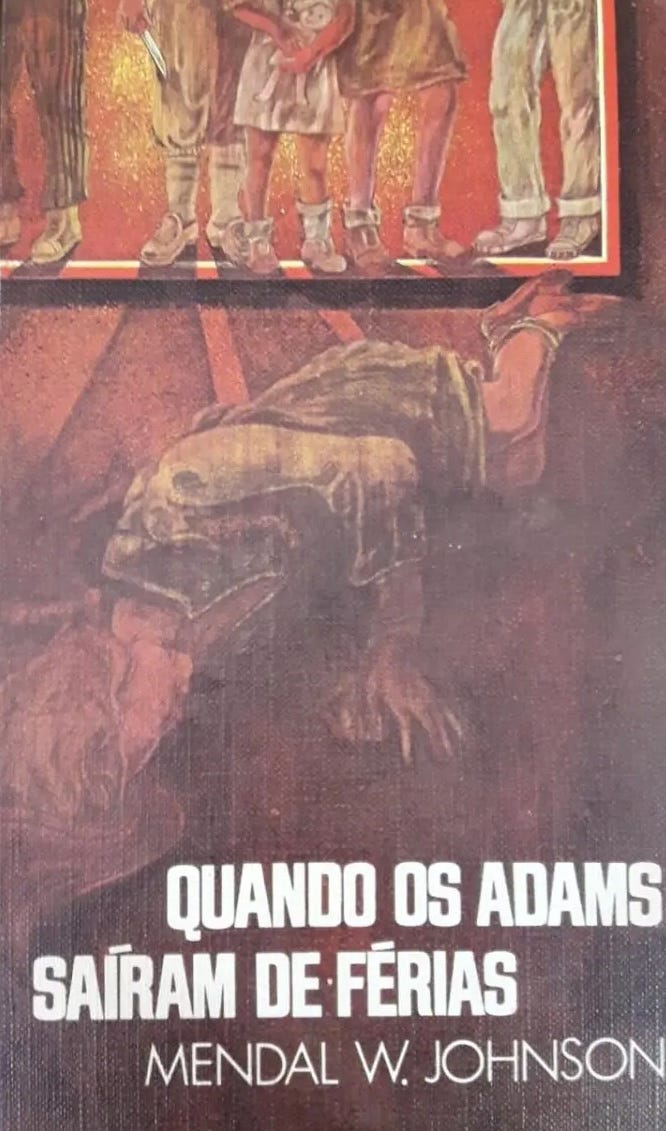
As a political allegory, the stripping away of an individual’s sovereignty over oneself is sadly rather too on-the-nose these days, but Let’s Go Play at the Adams’ also speaks to the realization that world is unfair, but — rather than trying to change it, rather than fighting for justice and righteousness — try only to win the “game” by its established rules, despite already knowing it is unfairly rigged.
At one point, Cindy reveals to Barbara that they’ve played this way amongst just themselves. They’ve each taken turns being the one tied up, stripped naked, tortured. And then when playtime was over, they each headed to their homes for dinner, and a new game would be played tomorrow.
Let’s Go Play at the Adams’ is distasteful, distressful, and utterly haunting. I fully appreciate the perspectives of those readers who claimed to throw the book across the room upon its completion. I also understand Grady Hendrix’s assertion that Let’s Go Play at the Adams’ is not a book you need read multiple times — because it sticks beneath your skin and scars you for life. That’s horror.
As an Amazon Associate I earn from qualifying purchases. You can support Horror Harwood by buying Let’s Go Play at the Adams’ on Amazon here. Thank you :)