

Carrie is one of those horror stories that everyone is at least vaguely aware of, even if they haven’t read the book or seen the movie. Or watched the TV show. Or the other movie. Or the musical.
It is, at its simplest, the story of a teenage girl with incredible telekinetic powers who murders many of her classmates after they dump a bucket of pig’s blood over her at senior prom. (Good for her.)
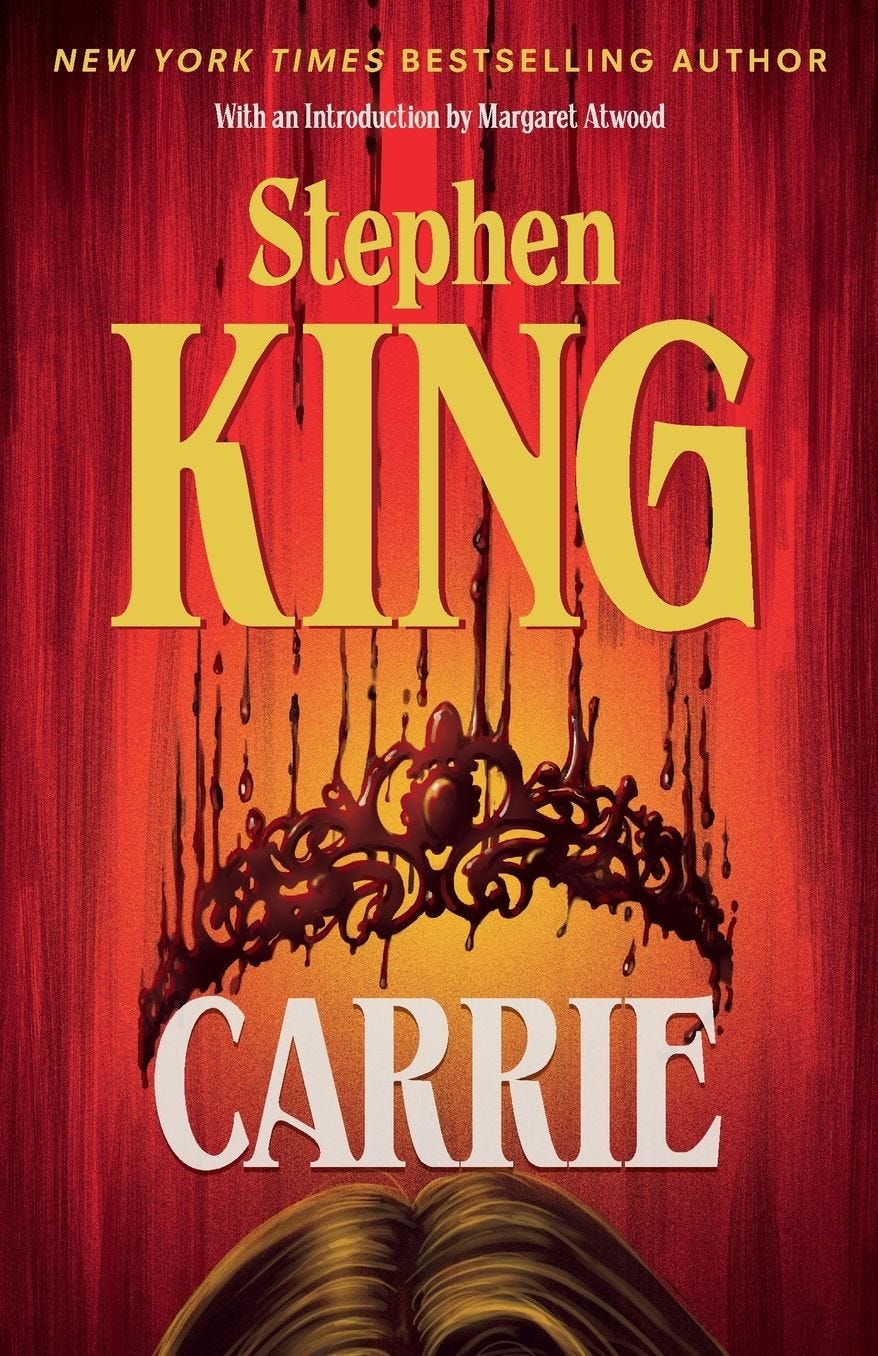
As the debut novel by Stephen King, Carrie is the book that would launch his decades-long career as a bestselling author, resuscitate the horror fiction business en mass, and ultimately make a star of Sissy Spacek (who plays Carrie in Brian De Palma’s 1976 film adaptation).
The book is very well written. King, of course, is the undisputed champion of horror authors, and yet, as I’ve admitted previously, he’s not necessarily a writer I especially enjoy. But Carrie feels quite different from some of his novels I’ve struggled with in the past. There are certain passages in the book that feel downright literary. There is a deftness of touch about this book that feels more thoughtful, more accessible, and less self-indulgent than in some of his denser works.
I was also surprised at the very narrow focus of the narrative. I was aware going in that the main event was the night of the high school prom, and yet I failed to realize just how much of a focal point that even takes up in the book. In truth, everything is based around it.
There is really only one significant event that occurs before prom night: the opening sequence of the book where Carrie is bullied in the locker room after gym class. Otherwise, the focus is either squarely on or very much adjacent to prom night: her enemies plot against her, there is the prom night prank itself, and then the terrible aftermath.
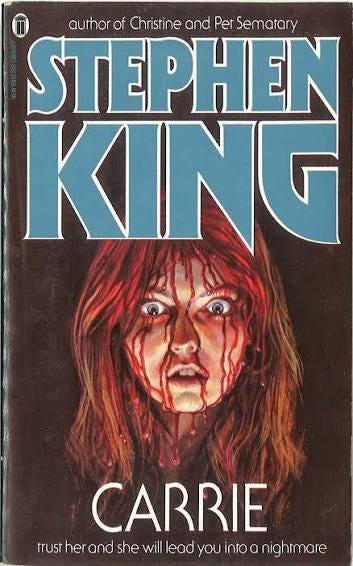
(There is, of course, another event in Carrie’s childhood involving raining stones, but while informative it is not strictly essential to the narrative of this wronged adolescent taking bloody revenge against her tormentors.)
Consequently, this tightly focused book is a page turning rip that sublimely evokes the feeling of a ticking clock counting down to that fateful night when all hell breaks loose.
The book expands on and fleshes out this highly succinct plot by bringing in other characters’ perspectives throughout, and in particular utilizes extracts from official reports that investigated the prom night tragedy as well as Carrie’s supernatural abilities and an autobiographical account from one of Carrie’s surviving classmates.
Much has been written about how the novel can be interpreted, as Carrie deals with, among other things, religious fanaticism, bullying and herd mentality, and the very basic human desire to feel loved and accepted.
But for me, the novel spoke most significantly to the twin ideas of self-discovery and self-acceptance.
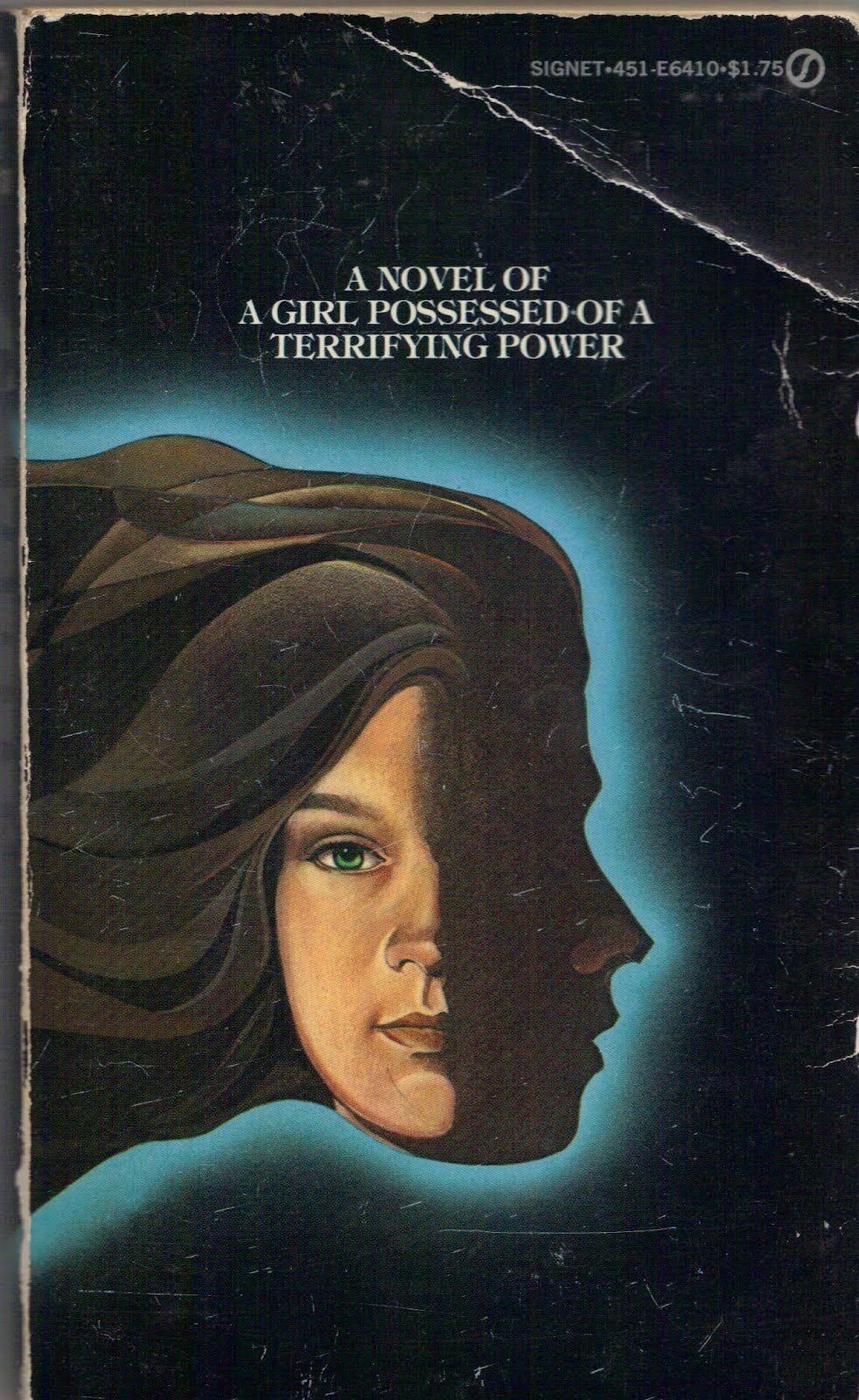
At the start of the novel, Carrie is not even aware how her own delayed body is supposed to function. She has been brainwashed at home by a mother who considers her own human desires to be sinful — to her the very fact that she procreated at all is blasphemous. Carrie’s sole caregiver and primary nurturer and mentor hates herself, hates Carrie, and has a drastically different view of the world than the rest of society.
It’s no wonder then that Carrie grew up to be so confused, both about who she is but also about the reality of how the world operates, what is good and what is bad. (It’s not use having morals if your morality tells you that everything is evil.) All she has, really, are her feelings to guide her. When she leaves school after the initially harrowing chapter, she’s not really any the wiser about what is happening to her, only that what the other kids did made her feel bad.
Add to this a superhuman power beyond all comprehension and conditions are ripe for a vengeful disaster to occur.
Carrie is a tragedy about a girl who has been told all her life that she is bad. She is sinful. She is weak. She is uncool. Tell anyone that enough and they will surely believe it. Carrie might well wipe out all those who have wronged her in her life, but her vengeful rampage is not a cause for celebration. It is a last-ditch effort to go down swinging, and strike back at the cruel world that has been nothing but a torment, forever and always.
Related reading:


